Nonfiction
The H Word: Reality Is a Nightmare
My experience in marketing, the secrets I was privy to in understanding what controlled people to make purchases: It felt like a strange power I had and one I didn’t really want anymore.
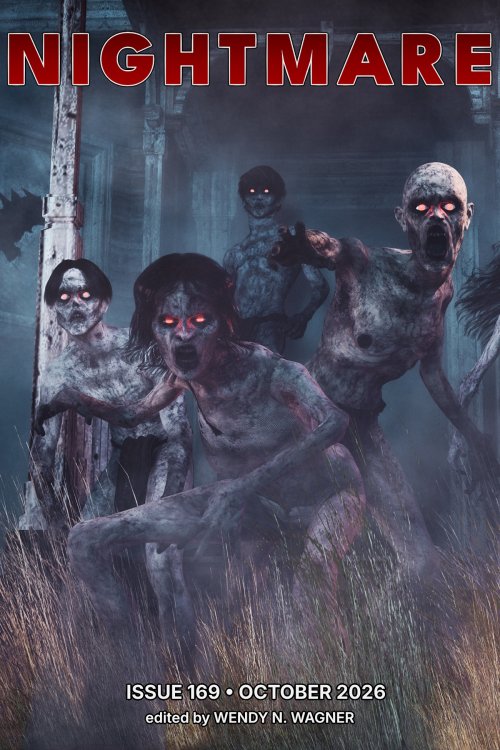
Jorōgumo, a spider that shapeshifts into a woman (there’s something for your nightmares). Zombies in every form. The making of a vampire. These transmutations represent more than just the birth of a baddie—they reflect change, upheaval, disruption, metamorphosis.
I’ve always loved gothic romances and horror. Darkness, melancholy, and intense emotion have long been my siren calls, and I gravitated to these genres like a werewolf to a full moon much before I became a functional reader.
Like many a ’90s kid, my first true foray into horror was R.L. Stine, with his Goosebumps and Fear Street series. The first book I picked up was Who’s Been Sleeping in My Grave?, about a boy named Zack who takes on his ghostly teacher. To say I was entranced was an understatement: Zack was an outsider, someone I could connect to and see myself in. There was a link I just couldn’t explain then. It wasn’t until a few years into reading Stine that I learned he was Jewish.
This is a story about fear that begins with its absence. Are there people who truly don’t get scared, and what can they teach us about horror? I’m not talking about the sweaty bravado of “Us wasn’t that scary.” I’m talking about having a gun jammed into your temple and not feeling the adrenaline spill into your blood. Such people are rare. They probably don’t read Nightmare, or Clive Barker, or Koji Suzuki (although they still should), but they do exist.
The Stradivarius is my love-letter retelling of Patrick Hamilton’s Gas Light, yes, but it’s also another in a long line of attempts to process my experience with the abuse that would come to define an era of my life. Today, I see “gaslighting” thrown around casually, usually as a high-powered stand-in word for “lying.” But as Mae and Carter—the main characters of The Stradivarius—or as I, or anyone else who’s experienced this type of abuse can tell you, it’s something far more devastating and complex.
I’ve watched monsters topple cities, scorch the countryside. I’ve explored the caverns they dwell in and swum the depths they arose from. When I existed in a different form, smaller, a bit more eager, I sought these monsters out or, more often, whimpered while I waited for them to slither out of the shadows. Would one appear while I showered? The sound of their squelching webbed steps hiding in the hot hiss of the water’s spray? Would they hover outside my window, backlit by the moon, their claws dragging down the windowpane?
It’s time to let the women with the long wet hair in Asian cinema and their Western remakes rest. They’re tired. Now I’m not saying the ghost herself should disappear. I think we can all agree that the images are haunting and succeed in inducing fantastical visual scares. What I’m saying is that the Asian “revenge wraith” trope needs to be updated. Misogyny in Western horror films is nothing new, but there’s been such a dramatic and positive shift with the roles of the “Final Girl” it makes me a tad envious.
Do the dead still matter? Years ago they did. Very much so. Especially in the horror genre. The dead—of the shambling, ambulatory, flesh-hungry variety—led the vanguard of the genre’s social commentary in George Romero’s horror films from the late 1960s through the mid-eighties. Night of the Living Dead, Dawn of the Dead, and Day of the Dead captured conscious and subconscious social tensions of their times better than many stories in any genre. Racial conflict. Anti-war sentiment. Consumer culture. Cold War dread.
You’re gonna love this band. They’re fucking terrifying. Horror fans often talk about disturbing books and movies, but music rarely enters this conversation. It’s a shame, given how some of my most terrifying experiences have come from a flimsy CD. Heavy metal, more than any other genre, scares me the most. Metal has no shortage of horror tributes. Legendary death metal band Cannibal Corpse has spent their thirty-plus-year career writing songs about serial killers, zombies, and torture chambers, with gory album covers to match.