Nonfiction
Editorial, January 2016
Be sure to read The Editorial for all our updates and a run-down of this month’s great content.


Advertisement
Be sure to read The Editorial for all our updates and a run-down of this month’s great content.
One is struck by the sheer staggering volume of young, fresh, powerful, innovative, incredible artists whose voices were silenced by HIV/AIDS before they’d had a chance to change the world like they clearly would have. And not just writers—the editors, agents, critics, audiences who supported and built these voices . . . it’s hard not to come away feeling like fiction was in the middle of a real revolution in terms of storytelling and voice and content and attitude, which was strangled in its crib by a deadly disease and a toxic, homophobic patriarchy.
[The book required] years and years of research, much of which I never had the opportunity to use, but it was vital to the process. I delved into alchemy, sacred geography, the Quivira and their language—I even got a chance to read a transcript of Coronado’s journal from the expedition. The truth is more fantastic than anything I could ever come up with.
I had to mull over ideas for a long time before I settled on one I liked. I had just read an article about the curative properties of raw honey, and particularly its ability to aid in the healing of wounds. So that was probably the actual seed. It’s a real thing, by the way. Raw honey is legendary for its ability to cure stubborn wounds, and now there’s scientific evidence to support that folk remedy.
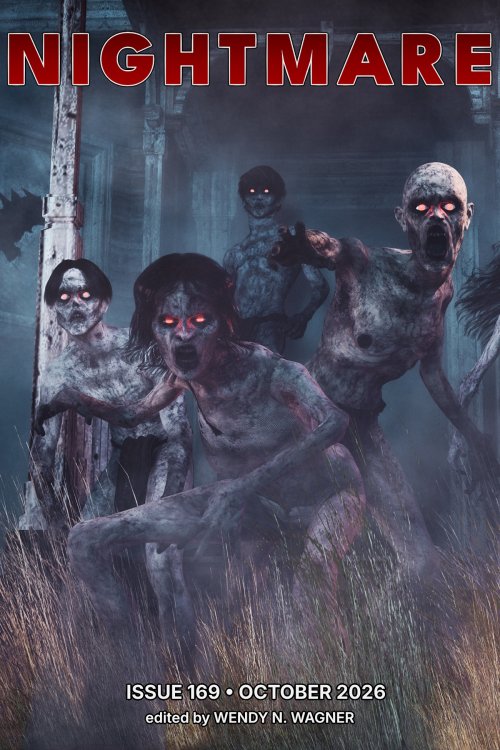
Kerem Beyit is a Turkish illustrator, whose work has been featured by Wizards of the Coast, Disney, Paizo Publishing, Blizzard Entertainment, Lucasarts, Simone & Schuster, and many others. Drawing has been a passion of his ever since he could remember. In his homeland, art is not perceived to be a way to earn a living, therefore it took a while for him to adopt his passion professionally, but since 2004 he has been working in a very disciplined fashion. Book covers, character design and fantasy-themed illustrations in general make up the bulk of his works. Learn more at kerembeyit.daportfolio.com.
I get bored sometimes, because selkies are almost always women who spend their long periods of captivity in relative passivity. My favorite selkie women burn down houses and murder fishermen to get back to the sea. People still resist seeing men in damsel roles, so male selkies are rare. Off the top of my head, I can’t think of a single butch selkie of any gender, which would be a delight.
Christmastime. Cold white snow outside, warmth from a glowing fire and loved ones inside. A tree beaming with decorations and tinsel. Brightly wrapped presents beneath. A veritable feast of turkey and all the trimmings. The hope of a new year ahead and treasured memories of the year coming to an end. And somewhere, lurking in the shadows, a vicious murderer in a Santa Claus suit, wielding a blood-soaked axe . . .
[The inspiration] was the idea of dolls and how different people imbue them with different meanings. Some people will look at a doll and think it’s cute, others that it’s horrific. I liked the idea of a grieving man finding solace in the strangest of places. Grief can do peculiar things to you.
Be sure to read the Editorial for all our news and updates, as well as a run-down of this month’s content.
Monsters are always fun to write about, right? Of a surety, the world is full of them. […] It didn’t take long for the story to take shape, but when I realized where it was going and the underlying metaphor, I almost didn’t write it.
Advertisement
Advertisement
Advertisement
Advertisement

Advertisement
Advertisement

Advertisement