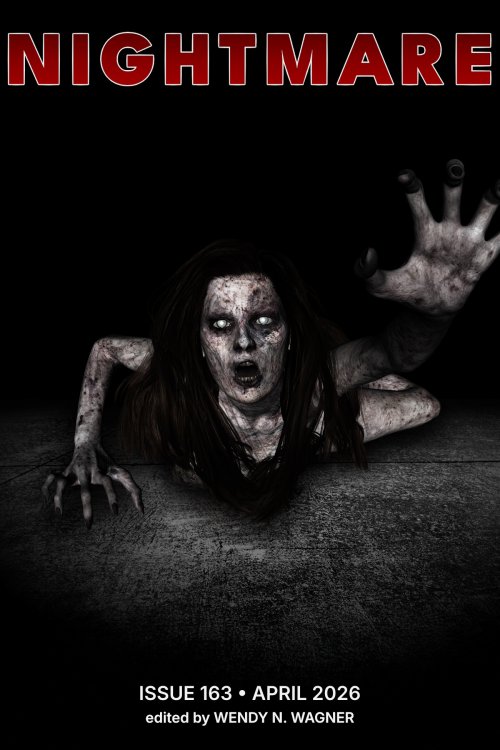
Welcome to issue #160 of Nightmare Magazine—and welcome to 2026!
I hope you’re ready for another terrific year of horror works from us here at Nightmare. Since our founding in 2012, we’ve been exploring the relationship between horror and other genres as well as what horror means to its creators and readers. That’s why we publish such a wide array of dark works here; we’re not just about scary stories, but also the weird, bizarre, grim, or even moody. We’re always excited about finding formally experimental work, and we love creative nonfiction and poetry that wrestles with the human experience. This month we’ll be opening to submissions for the first time in over a year (if you’re interested in submitting, go ahead and navigate over to the “Submit a Story” page), and we can’t wait to see what dark creations come our way!
The best thing about working here at Nightmare is connecting with insightful and intriguing people who put their all into their creations. Our writers bring their unique lived experiences to the task of exploring the human condition, and I think that’s why their writing is so memorable and rewarding. In a time when most of us are surrounded by bland, corporate big box buildings and bombarded with thoughtless, empty “content,” our writers are surgically extracting their inner worlds and offering them to you, our readers, so you can have a genuine, powerful experience.
If you think I’m talking about the way exploitive use of generative AI is creating a crisis of meaning and value, you’re right. And you’ll find that sentiment echoed in our flash story, “Dregs,” by R. Diego Martinez, a story equal parts science fiction and horror that perfectly speaks to our obsession with appearances—and our painful need to connect.
Our other pieces this month are equally focused on the human condition. We start the month with “The Tailors,” a powerful new piece from Kurt Fawver about war and the horrific things we’ll do to help our families. Sara S. Messenger also brings us a short story about family: “Jennifer’s Daughter.” It’s a story full of monsters and poverty, but also love and friendship. April Elaine Carson shares a potent response to death in her poem “At the Sight of My Grave, I Stumble.”
Our author spotlight team chatted with our writers to learn more about the inspiration behind their stories, and Alex Puncekar interviewed horror author Johnny Compton. We also have the latest installment of our H Word column.
From essays to short stories and everything in between, we’ve got you covered for new work that really delves into the meaning and joy of the horror genre. We can’t wait to fill up 2026 with more of the dark and delicious!