CW: Pregnancy/childbirth, miscarriages/abortion, blood/bodily fluids.
The initial spark for this story was a writing prompt I saw online about writing a review for a horror movie that doesn’t exist. It led me to think about my personal relationship with horror movies. Since having children, my tolerance for some of them has diminished, though my love has not. Specifically, horror movies about motherhood, while absolutely necessary and needed, are sometimes too close for me to handle. With that in mind, I wanted to write about a horror movie on motherhood—particularly the early days of motherhood—that is at arm’s length. To get all the beats of what I love about horror without it happening in real time. The review format lent itself to creativity and effectiveness, but in a sort of bubble, if that makes sense.
Cult-tempting Carmen Atalanta’s latest horror experiment is as much an unsettling masterpiece as the rest of her oeuvre. When the Baby Sleeps is a postpartum nightmare thrust upon the viewer, a bloating and bloody fever dream of wails and maws. Shot using a smartphone, it covers Ophelia Gataki’s near-birth and post-birth hauntings.
Eight-months pregnant Ophelia finds a black, wooden rattle toy at an estate sale, “beige-bitch perfect” for her modern, minimalist house palette. Ophelia finds the loud colors of children’s toys overrated and gaudy, and she puts the rattle in the nursery. What ensues is a series of episodic, dread-mounting moments, from notifications on her phone of a baby monitor that was never installed, to a lone, crying child that seems to follow her at a distance wherever she goes. What’s more terrifying is the dismissiveness and gaslighting maneuvers made by loved ones and the doctors who attend to her. “It’s not real,” they say, “you’ll feel better once the baby is born . . . ”
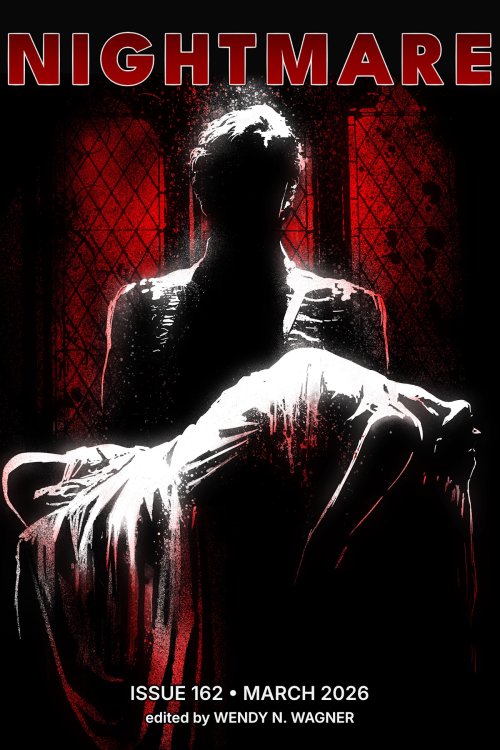
Atalanta ensures that viewers experience all angles of the birth, from the almost taboo moment of cutting the umbilical cord to nurses brutally pushing down on Ophelia’s uterus, with an unsettling, lingering close-up of the gush of fluids in response. Then, we as the viewer become uncertain whether we’re still viewing the birth scene in repetition or the haunting itself. At first, the viewer may guess a glitch in the film or blame it on poor editing, but then something else emerges: the eerie yet undeniable belief that the repetition of the birth and/or haunting is a choice. A purpose. Because is that not parenthood? A type of haunting? An umbilical cord drains blood in the crib; fileted reproductive organs are scattered throughout, though no one but Ophelia seems to acknowledge them; the newborn is heard but never seen; and Ophelia only sleeps when the baby sleeps, which is never. I must stress again (and I assure you this will not “spoil” the viewing experience): We never see the baby after the birth scene.
The viewer’s incredulity begins to mirror Ophelia’s as the film nears the climax, with an ending that is not easily described but will surely imprint on the mind. As with all of Atalanta’s work, there are no end credits. The screen fades to black, yet the sound of an infant crying can be heard, faintly piercing through the static of the movie theater’s speakers. Anyone who has been a parent knows that cry—an unrelenting, hiccupping wail. The baby is hungry. It cannot sleep.
Even now, as I write this, I hear an infant wailing in the next room, whooping breaths and desperate. I have no children. I am not even married. Somehow, Ophelia has left a note under my apartment door, with the words: “Congratulations. Soon. Soon.” Reader, I cannot tell if this is a brilliant marketing ploy by Atalanta or something else entirely.
I am tired . . . so tired . . . but blessed sleep doesn’t come until the crying stops . . .